UNOS pushes for nationwide adoption of tech and policy reforms to transform the donation and transplant system.
In 2025, the U.S. achieved a record for organ transplants for the fifth consecutive year. Behind all of these transplants are stories of hope and selfless generosity.
Total organ transplants
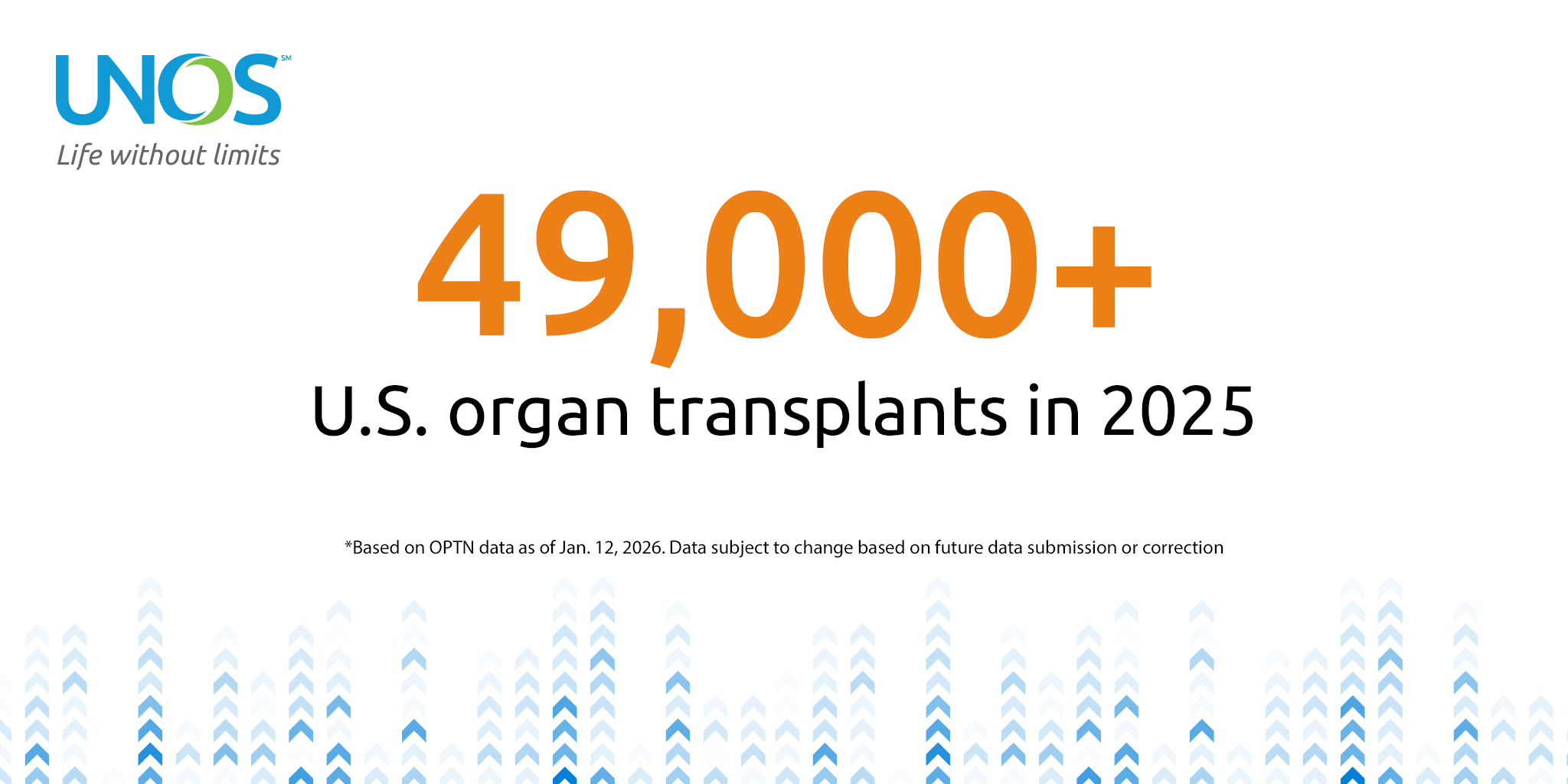
Last year, 49,064 organ transplants were performed nationwide. With the exception of 2020, transplants have increased each year since 2013. Living donation also continued to grow in 2025, with 7,237 people becoming living organ donors, a 3% increase over the previous year, according to new data from the Organ Procurement and Transplantation Network.
Kidney transplants
Kidney transplants declined slightly in 2025, with 27,573 transplants performed: 21,052 from deceased donors and 6,521 from living donors. This represents 102 fewer transplants than in 2024. More than 90,000 Americans are still waiting for a lifesaving kidney transplant.
These figures highlight the urgent need to increase both deceased and living kidney donations, and promote and encourage methods for increasing organ usage, to ensure trust in the U.S. organ donation and transplant system.
Liver transplants
Last year marked a record for liver transplants, with 12,344 performed, nearly 8% more than in 2024. Of those, 709 transplants were made possible by living donors, a 17% increase over the previous year.
Fewer deceased donations
For the first time in more than a decade, deceased donations dipped, decreasing by 2.5% with 16,550 deceased donors giving the ultimate gift of life.
“Setting a record of more than 49,000 transplants is a tremendous achievement for our nation,” said UNOS Interim CEO Mark Johnson. “This milestone is only possible because of the extraordinary generosity of donors and their families whose acts of selflessness have transformed the futures of thousands of patients. At the same time, the decrease in deceased donors needs to be better understood. The system is built on trust and UNOS will continue to be a partner in efforts to ensure a fair, effective and safe organ donation and transplant system.”
With more than 100,000 people currently waiting for an organ transplant, UNOS continues to leverage its decades of experience serving the U.S. donation and transplant system to call on Congress and federal regulators to advance long-overdue reforms for the OPTN.
These reforms include:
- Nationwide use of automated donor referral tools to identify potential donors faster
- A national, real-time organ tracking system to improve transparency and efficiency in organ transport
- Support for FAA recommendations for organ transport to ensure organs are transported safely and on time
- Medicare changes to expand access for medically complex kidney transplants for patients with challenging health conditions
“Technology and actionable data are keys to transforming the organ donation and transplant system,” Johnson said. “Innovations like nationwide adoption of automated donor referral tools and real-time organ tracking will make the system faster, safer and more transparent. These innovations, paired with policy reforms, will help ensure that every viable organ reaches the patient who needs it.”
In addition to its decades of experience serving as a contractor for the OPTN, UNOS applies its expertise in data science, biostatistics and healthcare technology to deliver innovative tools and resources for the donation and transplant community. By incorporating modern and innovative technologies, UNOS develops products that optimize patient outcomes and drive progress in transplantation. Its advanced Organ Tracking Service provides real-time location data for organs in transit, while UNOS Tools, a suite of data and research analytics services, helps transplant hospitals enhance patient care, improve quality, and support performance improvement initiatives.
About UNOS
The United Network for Organ Sharing (UNOS) is a nonprofit organization that serves the organ donation and transplant system and broader public health community through its work developing new technologies and initiatives, conducting data-driven research and analysis, providing expert consulting services, advocating for patients, and being a leader in bringing communities together to save lives.